If you’ve spent time collecting the old Tomy figures, you’ve probably paused at some point and asked yourself: what exactly does ·C·G·T·S·J mean?
The answer is actually quite simple. CGTSJ is an abbreviation of the key companies behind the brand at the time: Creatures, Game Freak, Tokyo (TV Tokyo), ShoPro, and JR Kikaku.
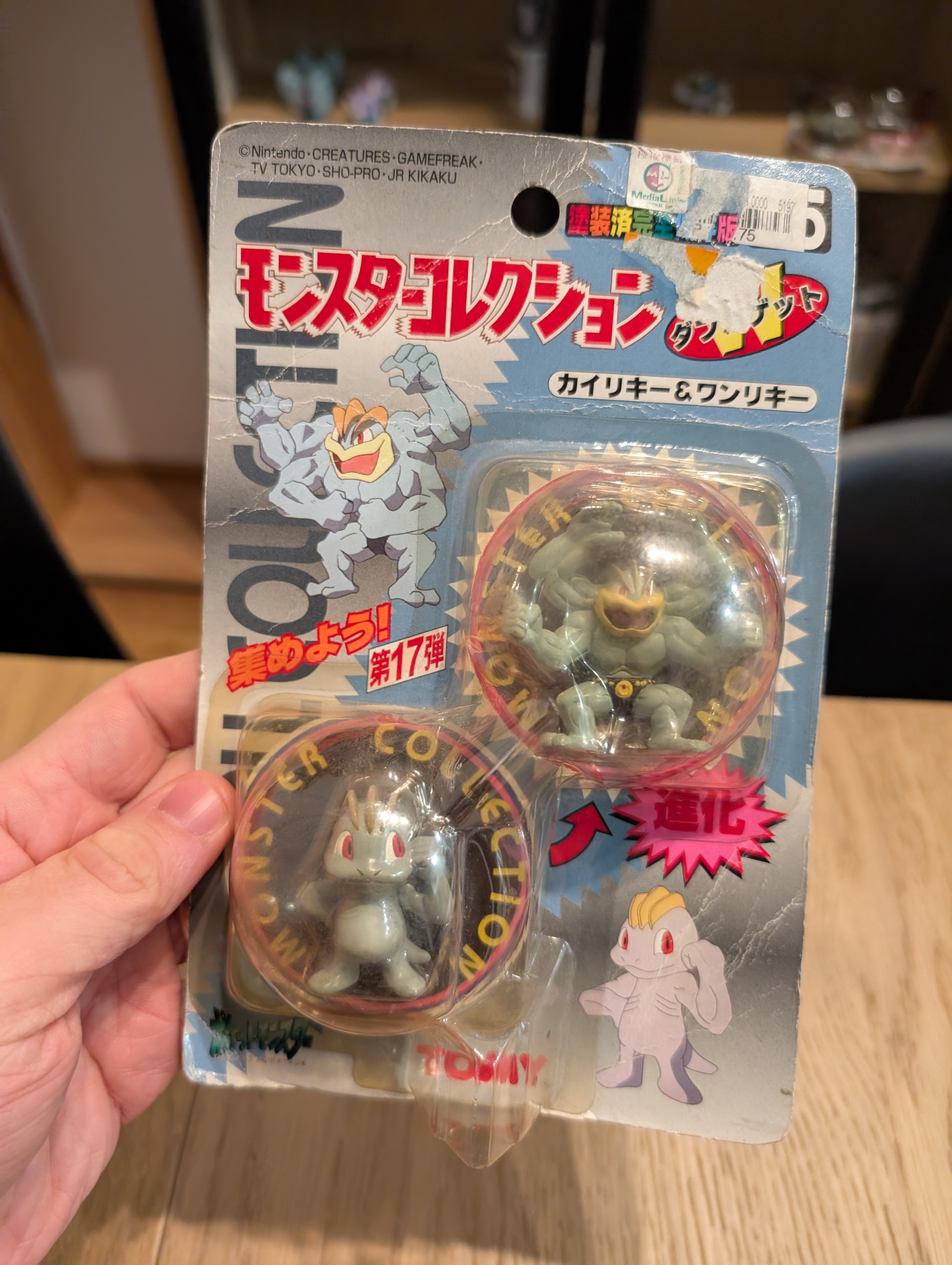
This isn’t speculation — we can clearly confirm it by looking at the original blisters, where the full licensing credits are printed. The engraving on the figures is simply a compact version of the same information displayed on the packaging.
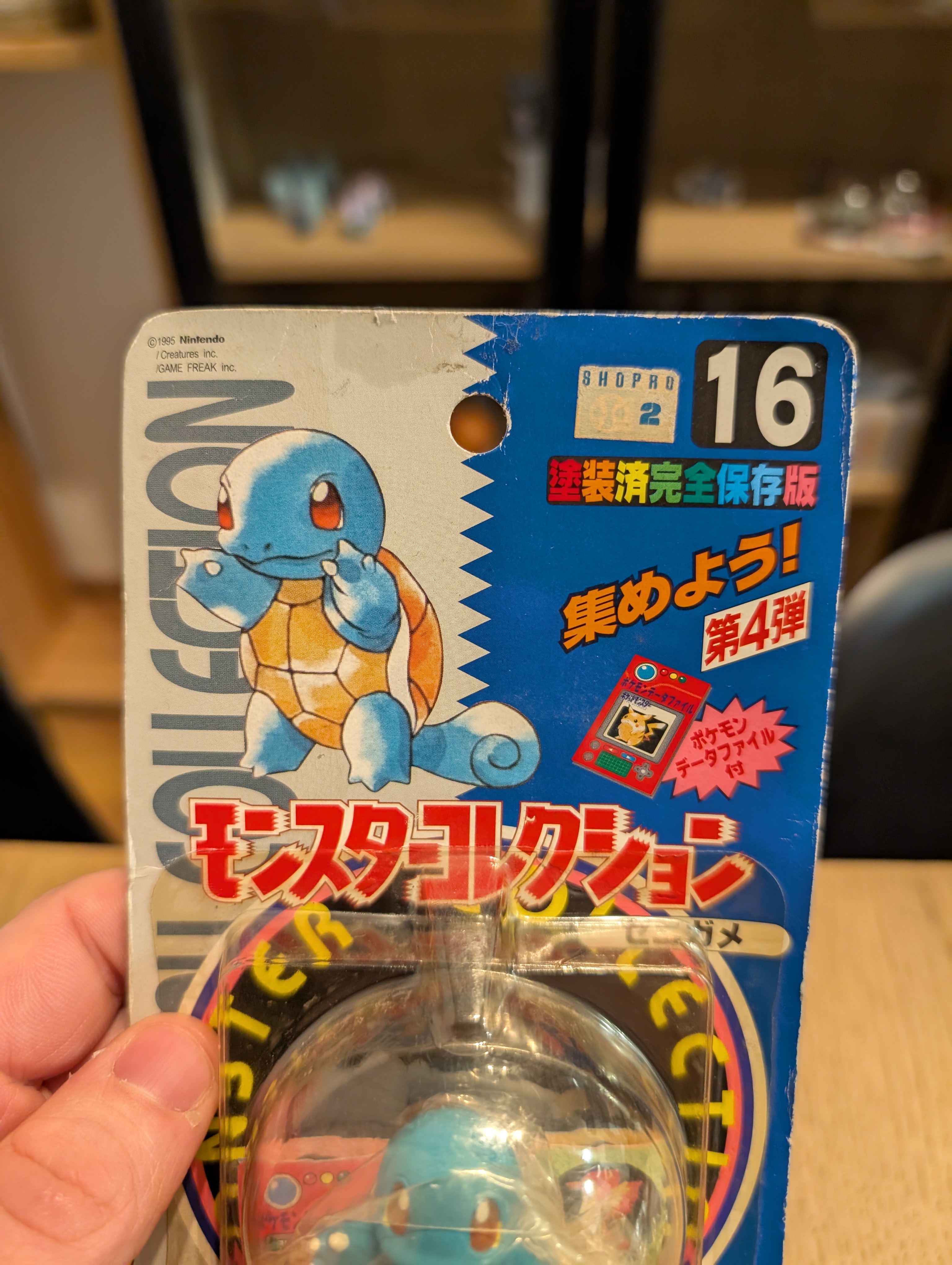
Applying that same reasoning, we can also understand why some of the very oldest figures are marked only with C/G. In those cases, the blister packaging does not display the full set of later licensing credits.
The C/G engraving simply refers to Creatures Inc. and Game Freak Inc., the two core companies responsible for the property at the time. This suggests an earlier stage in the licensing structure, before the broader group of partners was consistently included on the packaging.
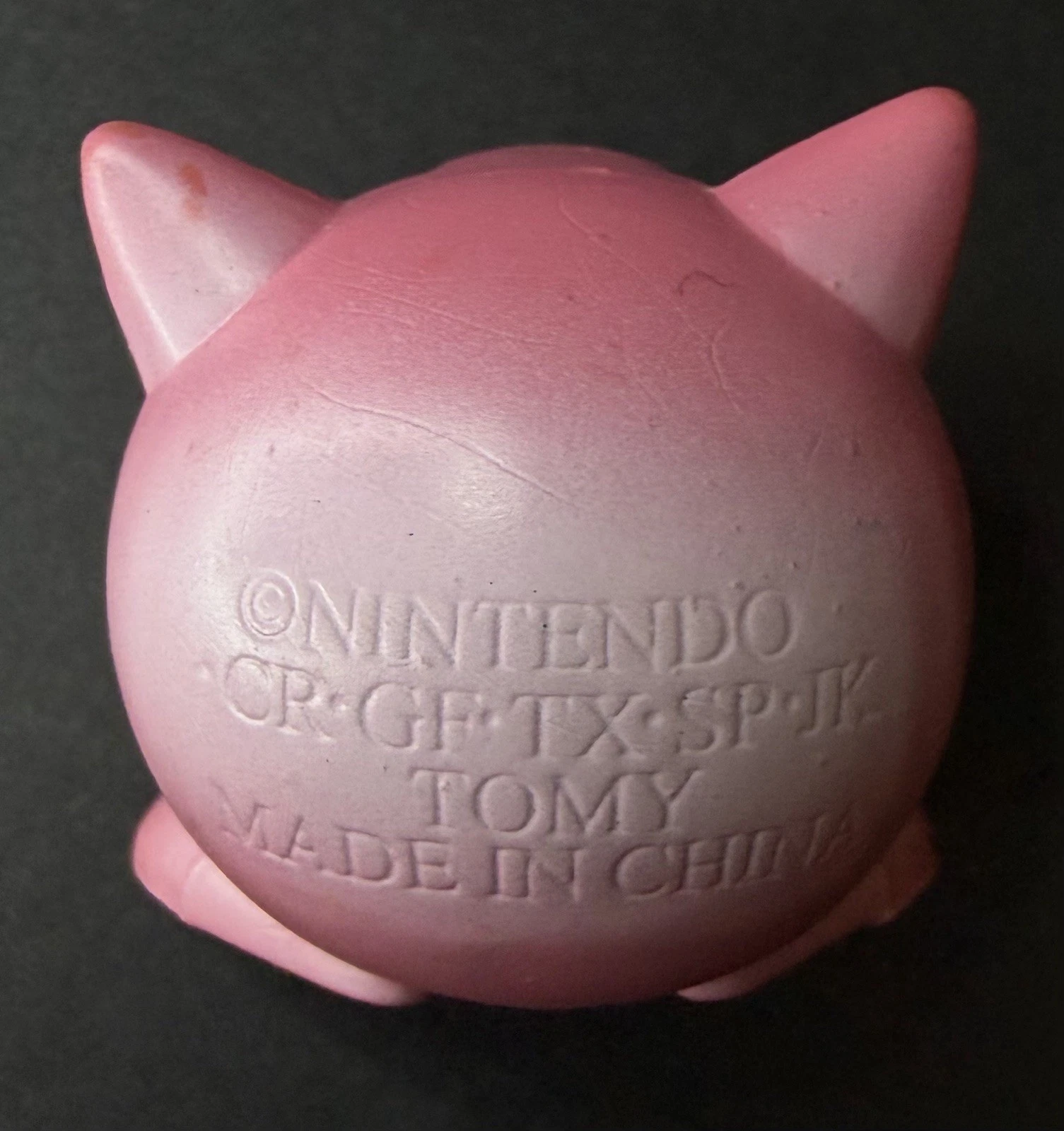
Another detail collectors often notice is that Mew and Jigglypuff carry a slightly different engraving. Instead of ·C·G·T·S·J, they read ·CR·GF·TX·SP·JK. At first glance, it looks like an entirely different set of initials — but in reality, it represents the very same group of rights holders.
The lettering format simply changes how the companies are abbreviated, not who is being credited. When we compare these figures to blister packaging from the same production period, we see the exact same licensing names listed — just as in the Machop and Machoke example.
So despite the visual difference in engraving, the meaning remains consistent: it’s the same licensing structure, presented in a slightly different shorthand.
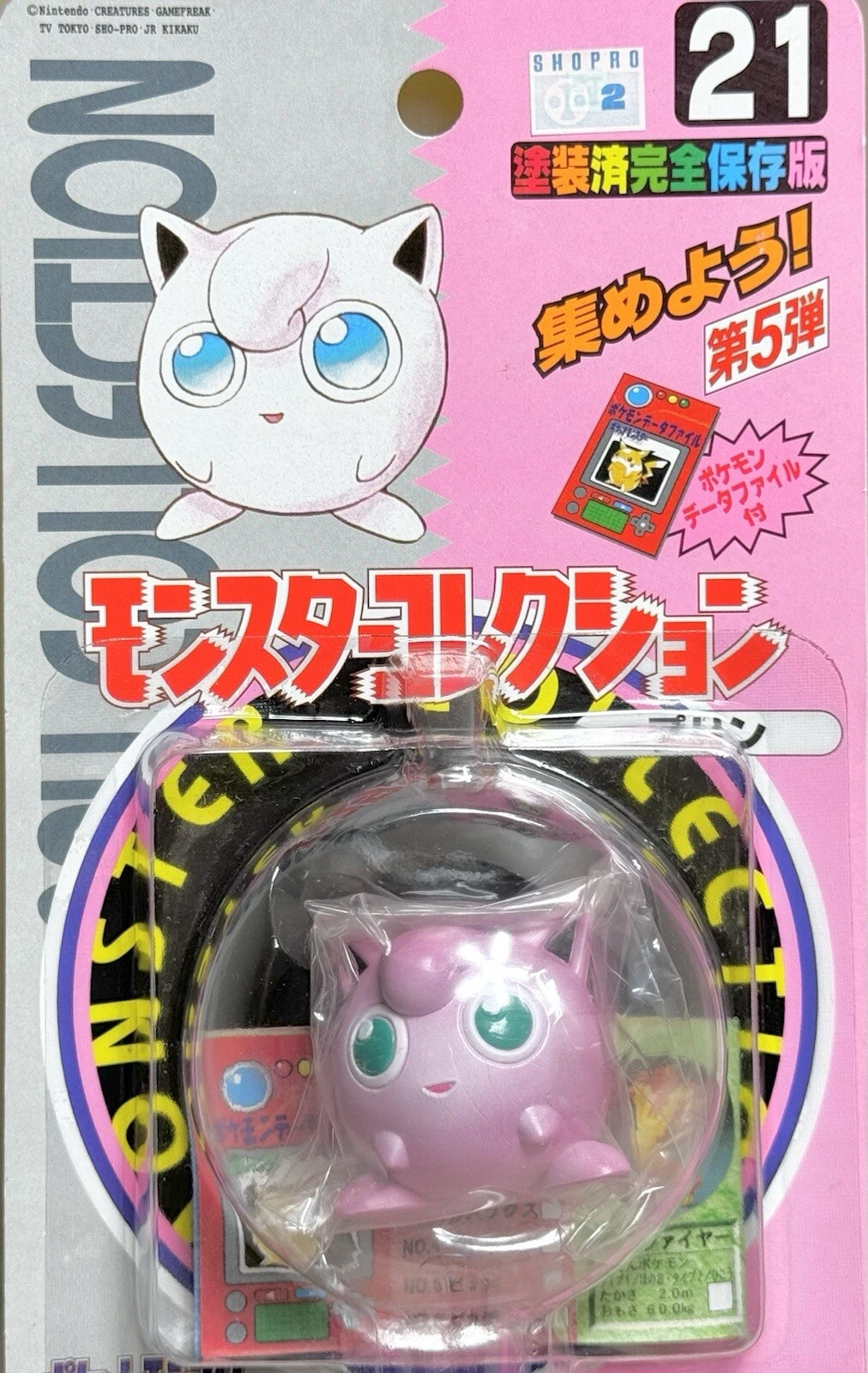
In the end, those small, mysterious engravings on your old Tomy figures aren’t random at all — they’re compact signatures of the companies that built the Pokémon phenomenon behind the scenes. Whether you see ·C·G·T·S·J or ·CR·GF·TX·SP·JK, the meaning is essentially the same: they reference the core rights holders — Creatures Inc., Game Freak Inc., ShoPro (Shogakukan Production), and JR Kikaku, alongside the broader Pokémon licensing structure active at the time.
The variations simply reflect formatting differences, space constraints, or slight production adjustments across early runs. Likewise, figures marked only with C/G point to an earlier licensing phase, when only Creatures Inc. and Game Freak Inc. were credited on the packaging.
For collectors, these markings are more than tiny letters pressed into plastic — they are timestamps of Pokémon’s early commercial history. They help us trace production eras, understand licensing evolution, and appreciate how coordinated the brand already was during its first wave of merchandise.
So next time you flip over a figure and spot those engraved initials, you’ll know: you’re holding a small piece of Pokémon’s corporate DNA.